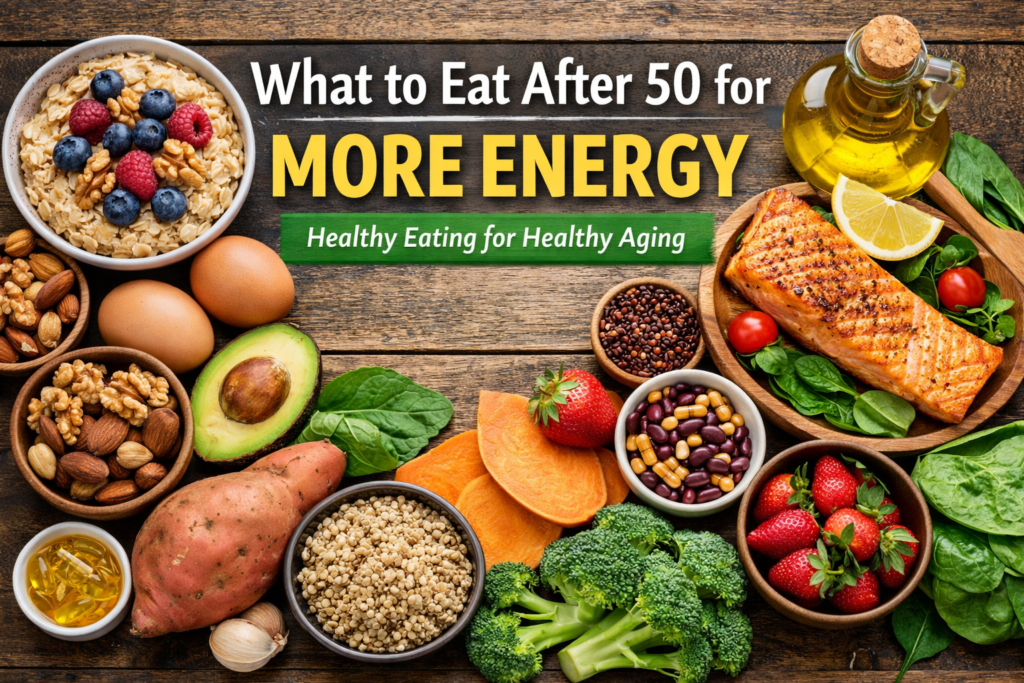
Simple nutrition changes that help you feel better every day
If you’ve crossed the 50 mark and noticed your energy isn’t what it used to be, you’re not alone. Many people assume fatigue is just part of aging, but often it’s more about what we eat than how old we are.
After 50, metabolism slows, muscle mass naturally declines, and nutrient absorption changes. The good news? Smart food choices can dramatically improve energy, mood, and overall health.
This guide breaks down what to eat after 50 to feel more energized—without complicated diets or expensive supplements.
Why Energy Drops After 50
Several things happen as we age:
- Muscle mass declines, lowering metabolism
- Hormonal changes affect energy and sleep
- Digestion becomes less efficient
- Blood sugar swings hit harder
- Many people become less active
The result? Afternoon crashes, sluggish mornings, and less stamina overall.
But food can help reverse much of this.
The 5 Foods Your Body Needs Most After 50
Instead of focusing on restriction, think about fueling your body properly.
1. Protein at Every Meal
Protein becomes more important as we age because it helps:
- Preserve muscle mass
- Keep metabolism higher
- Control appetite
- Maintain steady energy
Good protein choices include:
- Eggs
- Greek yogurt
- Chicken and turkey
- Fish
- Lean beef
- Beans and lentils
- Cottage cheese
- Protein smoothies
Aim for 20–30 grams of protein per meal if possible.
If breakfast is usually toast or cereal, upgrading to protein makes a big difference. For ideas, see our guide to 7 Breakfasts That Boost Metabolism:
2. Fiber-Rich Carbohydrates (Not Refined Ones)
Carbs aren’t the enemy—but refined carbs drain energy.
White bread, pastries, and sugary snacks cause blood sugar spikes followed by crashes.
Instead choose:
- Oatmeal
- Whole-grain bread
- Brown rice
- Sweet potatoes
- Beans
- Fruits
- Vegetables
Fiber helps maintain steady blood sugar and keeps you full longer.
If grocery shopping feels overwhelming, check out My Go-To Grocery List for Healthy Eating on a Budget:
3. Healthy Fats for Brain and Hormone Support
Healthy fats help with:
- Brain function
- Hormone balance
- Joint health
- Sustained energy
Best sources include:
- Olive oil
- Avocados
- Nuts and seeds
- Fatty fish like salmon and sardines
- Nut butters
Fat slows digestion slightly, giving you longer-lasting energy.
4. Vegetables and Fruits for Micronutrients
As we age, deficiencies in vitamins and minerals become more common.
Vegetables and fruits provide:
- Potassium for blood pressure
- Magnesium for muscle and nerve function
- Vitamin C for immune health
- Antioxidants for cell protection
Try filling half your plate with vegetables at lunch and dinner.
Easy options:
- Frozen vegetable mixes
- Pre-washed salad greens
- Roasted vegetables
- Stir-fries
- Vegetable soups
5. Water — The Most Overlooked Energy Booster
Many adults over 50 are mildly dehydrated without realizing it.
Dehydration causes:
- Fatigue
- Brain fog
- Headaches
- Muscle cramps
Aim for 6–8 glasses of water daily, more if active or in warm weather.
Coffee is fine, but water still matters.
Best Energy-Boosting Foods After 50
If you want quick wins, add more of these foods:
✔ Eggs
✔ Greek yogurt
✔ Oatmeal
✔ Berries
✔ Salmon
✔ Sweet potatoes
✔ Leafy greens
✔ Nuts and seeds
✔ Beans and lentils
✔ Olive oil
Simple foods often beat fancy diet trends.
Eating Habits That Improve Energy
Energy isn’t just about what you eat but how you eat.
Eat Regular Meals
Skipping meals often leads to overeating later and energy crashes.
Add Protein Early in the Day
A high-protein breakfast improves energy for hours.
Avoid Heavy Late-Night Eating
Large late meals disrupt sleep, hurting next-day energy.
Walk After Meals
Even a 10-minute walk improves blood sugar control and energy.
Foods That Drain Energy After 50
Limit—not necessarily eliminate—these:
- Sugary drinks
- Candy and desserts
- White bread and pasta
- Deep-fried foods
- Excess alcohol
- Ultra-processed snacks
They tend to spike blood sugar and then leave you feeling tired.
Sample Energy-Friendly Day of Eating
Breakfast
Oatmeal with berries, Greek yogurt, and walnuts
Lunch
Grilled chicken salad with olive oil dressing and whole-grain bread
Snack
Apple with peanut butter
Dinner
Baked salmon, sweet potato, and roasted vegetables
Evening
Herbal tea or cottage cheese if hungry
Nothing fancy—just balanced meals.
Do You Need Supplements?
Food should come first, but some people over 50 may benefit from:
- Vitamin D
- Vitamin B12
- Magnesium
- Omega-3 fish oil
Always discuss supplements with a healthcare provider first.
Final Thoughts: Energy After 50 Is Still Possible
Feeling tired isn’t something you simply have to accept after 50.
Often, small food changes create big improvements:
- Add protein to every meal
- Choose whole foods more often
- Stay hydrated
- Eat balanced meals regularly
- Limit refined carbs and sugar
The goal isn’t dieting—it’s fueling your body so you feel good every day.
Small improvements today can mean more energy, mobility, and independence for years to come.
The Best Diet Plans Guide Team is a group of wellness writers and nutrition researchers dedicated to helping readers find simple, sustainable, and science-backed diet plans. We review products, compare meal programs, and share practical tips for healthy living at any age. Our mission is to make better health choices easier — one plan at a time.