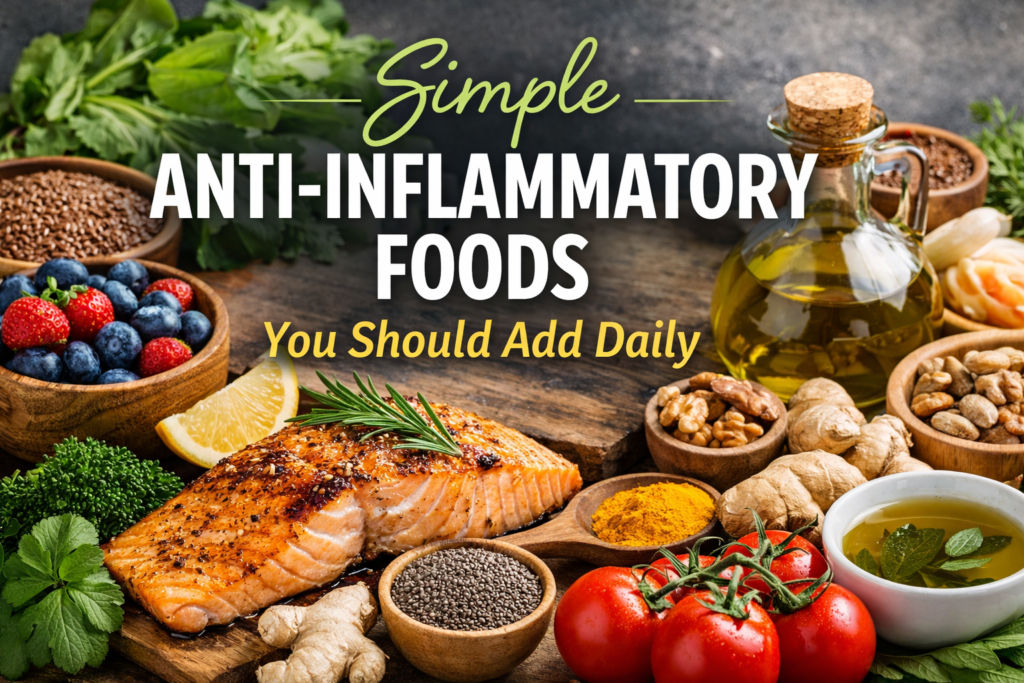
Chronic inflammation is increasingly recognized as a hidden contributor to many modern health issues, including heart disease, joint pain, digestive problems, diabetes, and even fatigue. While short-term inflammation helps your body heal from injury or illness, long-term, low-level inflammation can quietly damage tissues and organs over time.
The good news? One of the easiest and most effective ways to reduce inflammation is through everyday food choices. You don’t need expensive supplements or complicated diets—just consistent, simple food swaps.
Here are simple anti-inflammatory foods you can easily add to your daily routine to support long-term health.
What Causes Chronic Inflammation?
Before we dive into foods, it helps to understand what fuels inflammation. Common contributors include:
- Highly processed foods
- Excess sugar
- Refined carbohydrates
- Fried foods
- Excess alcohol
- Chronic stress
- Poor sleep
- Sedentary lifestyle
Adding anti-inflammatory foods while reducing processed options helps your body shift back toward balance.
1. Berries: Small but Powerful
Berries are among the most antioxidant-rich foods you can eat. They contain compounds called anthocyanins, which help reduce inflammation and protect cells from damage.
Best choices:
- Blueberries
- Strawberries
- Raspberries
- Blackberries
Easy ways to eat them daily:
- Add to oatmeal or cereal
- Mix into yogurt
- Blend into smoothies
- Eat as a snack
- Top salads with fresh berries
Fresh or frozen both work equally well, making them easy year-round.
2. Fatty Fish: Nature’s Anti-Inflammatory Protein
Fatty fish are rich in omega-3 fatty acids, known for their strong anti-inflammatory effects. Omega-3s help lower inflammatory markers in the body and support heart and brain health.
Top choices:
- Salmon
- Sardines
- Mackerel
- Tuna
- Trout
Simple daily habit:
Aim for fatty fish two to three times per week, or add canned tuna or salmon to salads and sandwiches.
If fish isn’t your favorite, omega-3 eggs or plant sources like walnuts and flaxseed can help fill the gap.
3. Leafy Greens: Daily Protection
Leafy greens are loaded with vitamins, minerals, fiber, and antioxidants that help reduce inflammation and support digestion.
Great options include:
- Spinach
- Kale
- Arugula
- Swiss chard
- Romaine lettuce
Easy ways to eat more:
- Add a handful to smoothies
- Use greens as sandwich wraps
- Toss into soups or stir-fries
- Build larger salads for lunch
Even adding a small portion daily can make a difference.
4. Olive Oil: A Healthier Fat Choice
Extra virgin olive oil contains compounds similar to anti-inflammatory medications, helping reduce inflammation naturally.
How to use it daily:
- Drizzle on salads or vegetables
- Use instead of butter
- Dip whole-grain bread in olive oil
- Use lightly for cooking
Choose extra virgin olive oil for the highest antioxidant benefits.
5. Nuts and Seeds: Small Additions, Big Benefits
Nuts and seeds provide healthy fats, fiber, and antioxidants that help reduce inflammation and support heart health.
Best daily options:
- Walnuts
- Almonds
- Chia seeds
- Flaxseeds
- Pumpkin seeds
Easy daily uses:
- Sprinkle on yogurt or oatmeal
- Add to salads
- Blend into smoothies
- Snack on a small handful
A small portion (about a handful) daily is enough.
6. Tomatoes: Simple and Versatile
Tomatoes are rich in lycopene, a powerful antioxidant linked to reduced inflammation and heart disease risk.
Ways to enjoy them daily:
- Add fresh slices to sandwiches
- Use in salads
- Cook into sauces and soups
- Roast with vegetables
Cooking tomatoes can actually increase lycopene absorption, making sauces and stews great options.
7. Turmeric and Ginger: Natural Anti-Inflammatory Spices
Both turmeric and ginger contain natural compounds that help reduce inflammation.
Easy ways to include them:
- Add turmeric to rice or vegetables
- Use ginger in stir-fries
- Make ginger tea
- Blend into smoothies
- Add spices to soups or sauces
Pair turmeric with black pepper to improve absorption.
8. Green Tea: A Simple Daily Swap
Green tea contains antioxidants that help combat inflammation and oxidative stress.
Daily tip:
Replace one sugary drink or soda with green tea to support hydration and reduce inflammation.
Hot or iced works equally well.
Building an Anti-Inflammatory Plate
You don’t need perfection—just consistent improvements.
A simple anti-inflammatory daily plate might include:
- Oatmeal with berries and nuts for breakfast
- Salad with leafy greens, olive oil, and salmon for lunch
- Vegetables, lean protein, and whole grains for dinner
- Nuts or fruit as snacks
- Green tea or water instead of sugary drinks
Small upgrades add up quickly over time.
Foods That Increase Inflammation
Just as important as adding good foods is reducing those that fuel inflammation:
- Sugary drinks
- Processed snacks
- Refined white bread and pastries
- Deep-fried foods
- Processed meats
- Excess alcohol
You don’t need to eliminate them completely—just reduce how often they appear.
The Goal Is Consistency, Not Perfection
Inflammation doesn’t disappear overnight. But consistent daily choices create long-term improvements in energy, joint comfort, digestion, and overall health.
Focus on adding good foods first rather than obsessing over restrictions. Over time, healthier options naturally replace less helpful ones.
Start with one or two additions this week and build gradually.
Your future self will thank you.
Final Thoughts
Adding anti-inflammatory foods daily is one of the simplest ways to support long-term health. Berries, leafy greens, fatty fish, olive oil, nuts, and spices are easy to include without complicated meal plans.
Small steps done consistently create real results.
Healthy eating doesn’t have to be complicated—it just needs to be consistent.

The Best Diet Plans Guide Team is a group of wellness writers and nutrition researchers dedicated to helping readers find simple, sustainable, and science-backed diet plans. We review products, compare meal programs, and share practical tips for healthy living at any age. Our mission is to make better health choices easier — one plan at a time.