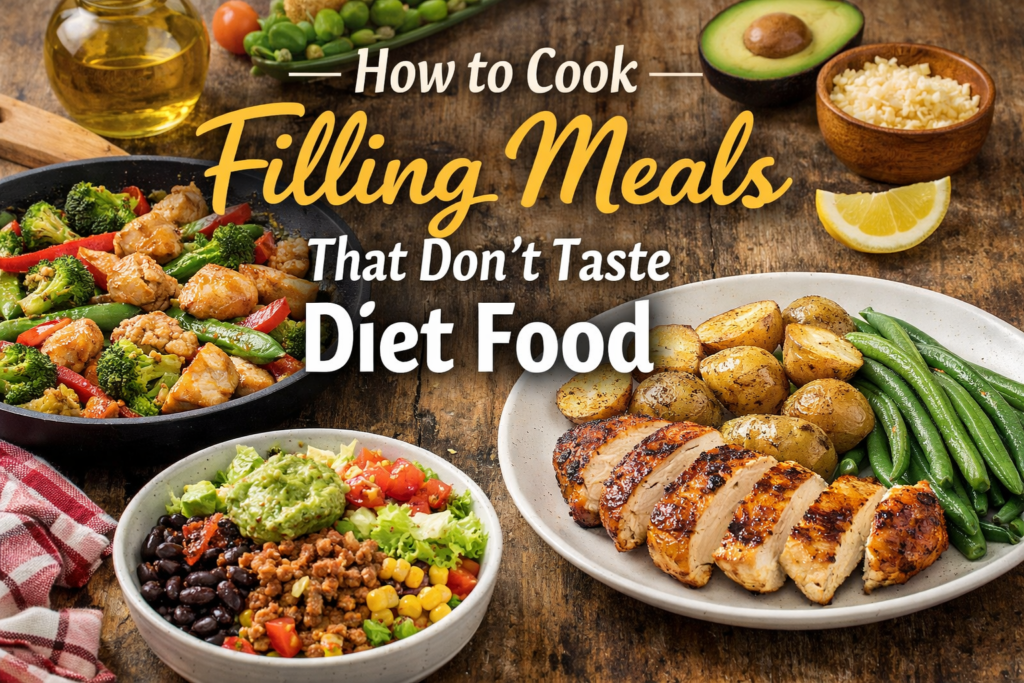
Most people don’t fail at eating better because they lack discipline.
They fail because the food tastes like punishment.
Dry chicken. Tiny portions. Meals that leave you hungry an hour later.
That’s not sustainable—especially in retirement, when you’re cooking most of your meals at home and watching every dollar.
The good news?
You can cook filling, satisfying meals that feel normal, taste good, and still support your health—without counting calories or eating “diet food.”
Stop Thinking “Low-Calorie.” Start Thinking “Filling.”
The goal isn’t to eat as little as possible.
The goal is to eat foods that keep you full longer.
That usually means meals built around three things:
- Protein – keeps hunger away
- Fiber – slows digestion
- Healthy fats – add flavor and satisfaction
When meals include all three, you naturally snack less later.
That’s exactly how I approach food now, especially living on a fixed income. I talk more about that in 5 One-Pan Meals Under 500 Calories.
Cook Real Portions (Just Smarter Ones)
You don’t need tiny plates or measuring cups.
Instead of shrinking meals, rebalance them:
- Slightly less starch (rice, pasta, bread)
- More protein and vegetables
- Enough fat to make it taste good
A simple visual:
- Half your plate: vegetables
- A palm-sized portion of protein
- A modest scoop of starch
- A drizzle of oil or butter
This still feels like a real meal—because it is.
Use Fat for Flavor (Not Fear)
Fat is not the enemy. Bland food is.
A small amount of fat makes meals satisfying and prevents late-night cravings.
Good options:
- Olive oil
- Butter (yes, butter)
- Cheese (used reasonably)
- Eggs
- Avocado
You don’t need a lot. You just need enough.
This mindset shift alone made eating simpler for me, and it fits right in with the habits I share in The Beginner’s Guide to Meal Prepping for Weight Loss.
Season Like You Mean It
Most “diet food” tastes bad because it’s under-seasoned.
Flavor doesn’t come from calories—it comes from spices, herbs, acid, and salt.
Keep a short list handy:
- Garlic powder & onion powder
- Smoked paprika or chili powder
- Italian seasoning
- Soy sauce or Worcestershire
- Lemon juice or vinegar
A squeeze of lemon or splash of vinegar at the end can completely change a meal.
Build Meals That Feel Familiar
You don’t need special recipes.
Just modify what you already like.
4
Examples:
Instead of: Pasta with a little meat
Try: More meat and vegetables, slightly less pasta
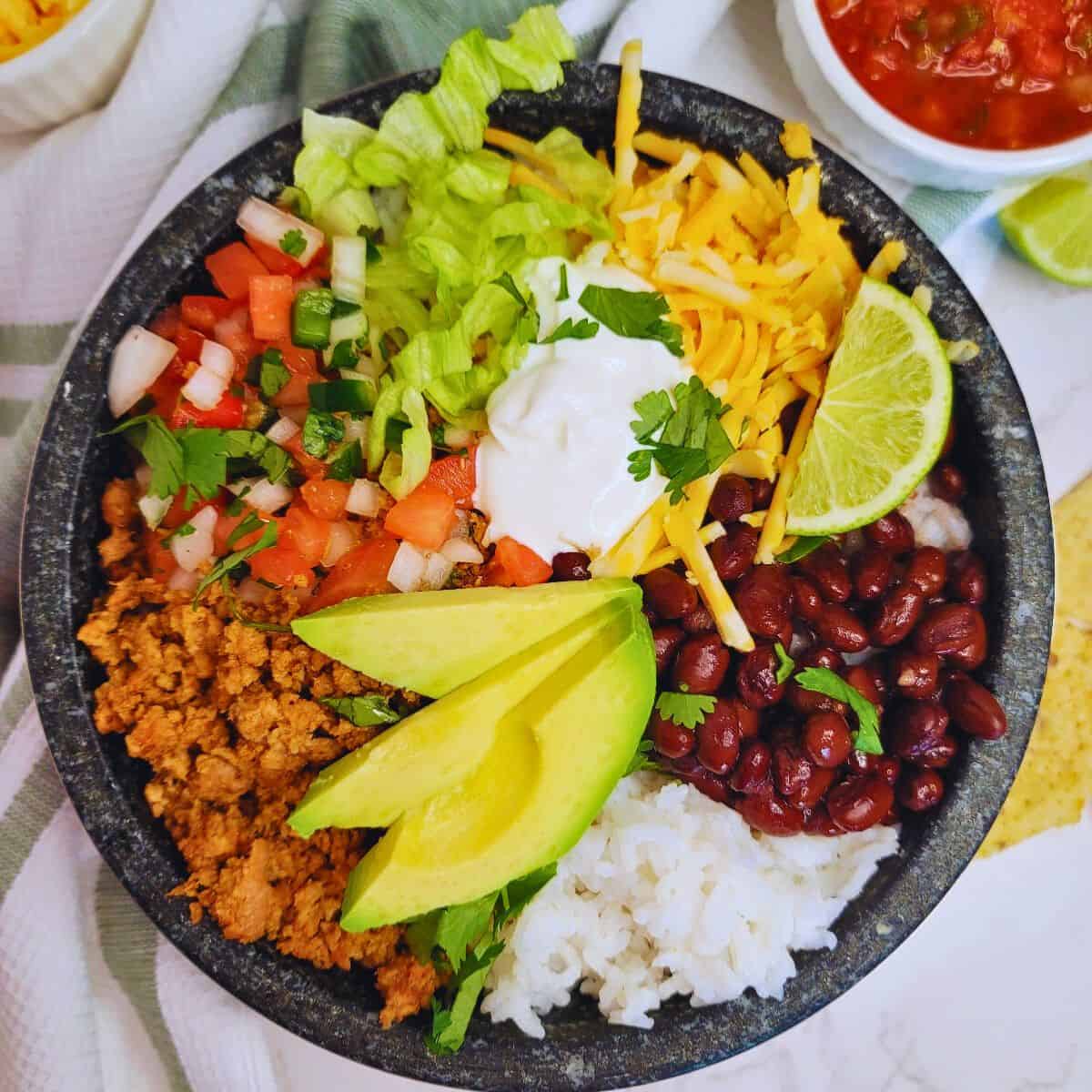
Instead of: Tacos with lots of shells
Try: Taco bowls with seasoned meat, beans, veggies, and a little cheese
Instead of: Fried chicken and fries
Try: Oven-roasted chicken with seasoned potatoes and vegetables
Same flavors. Same comfort. Better balance.
Don’t Turn Every Meal Into a Project
If eating better feels complicated, it won’t last.
Simple meals win:
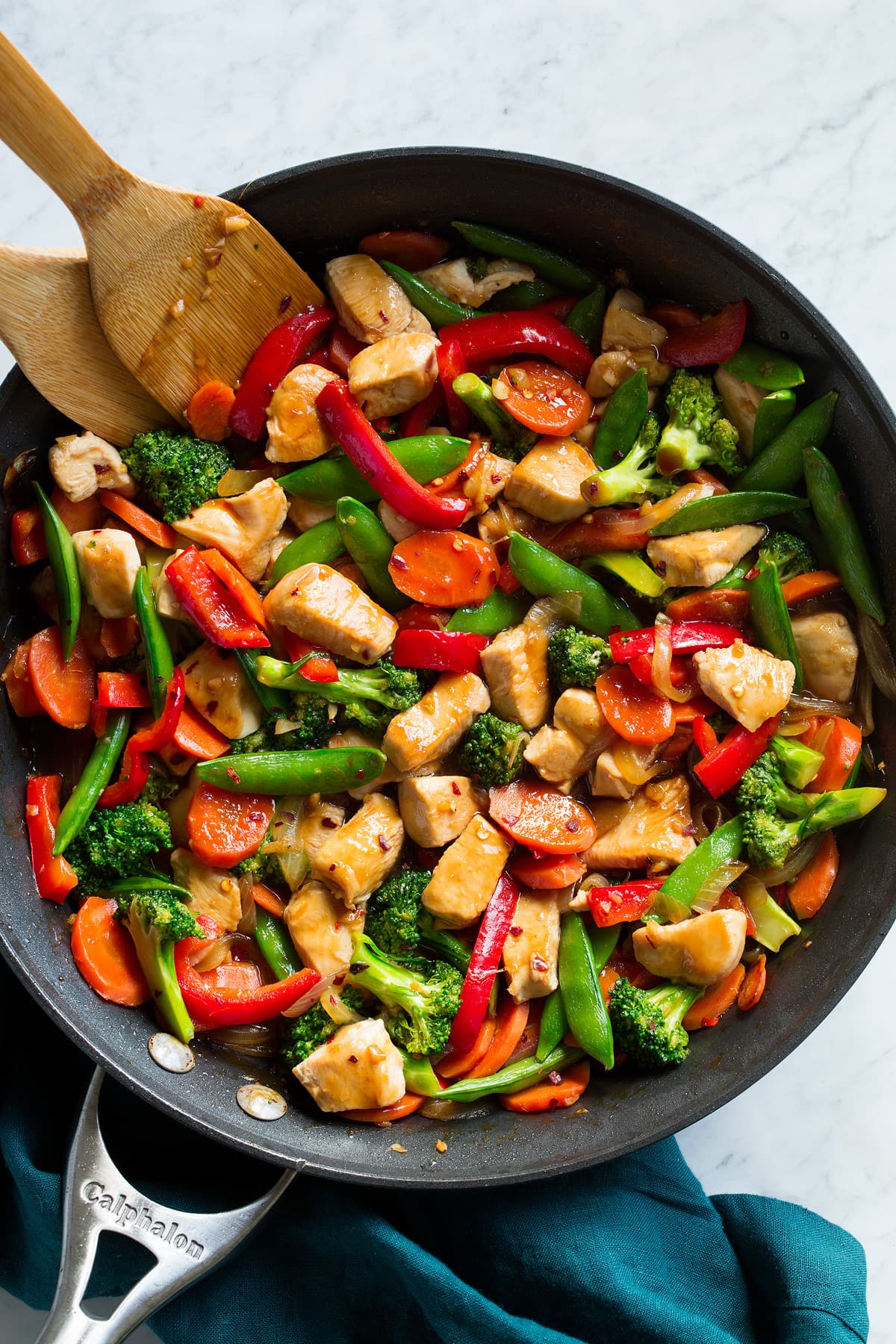
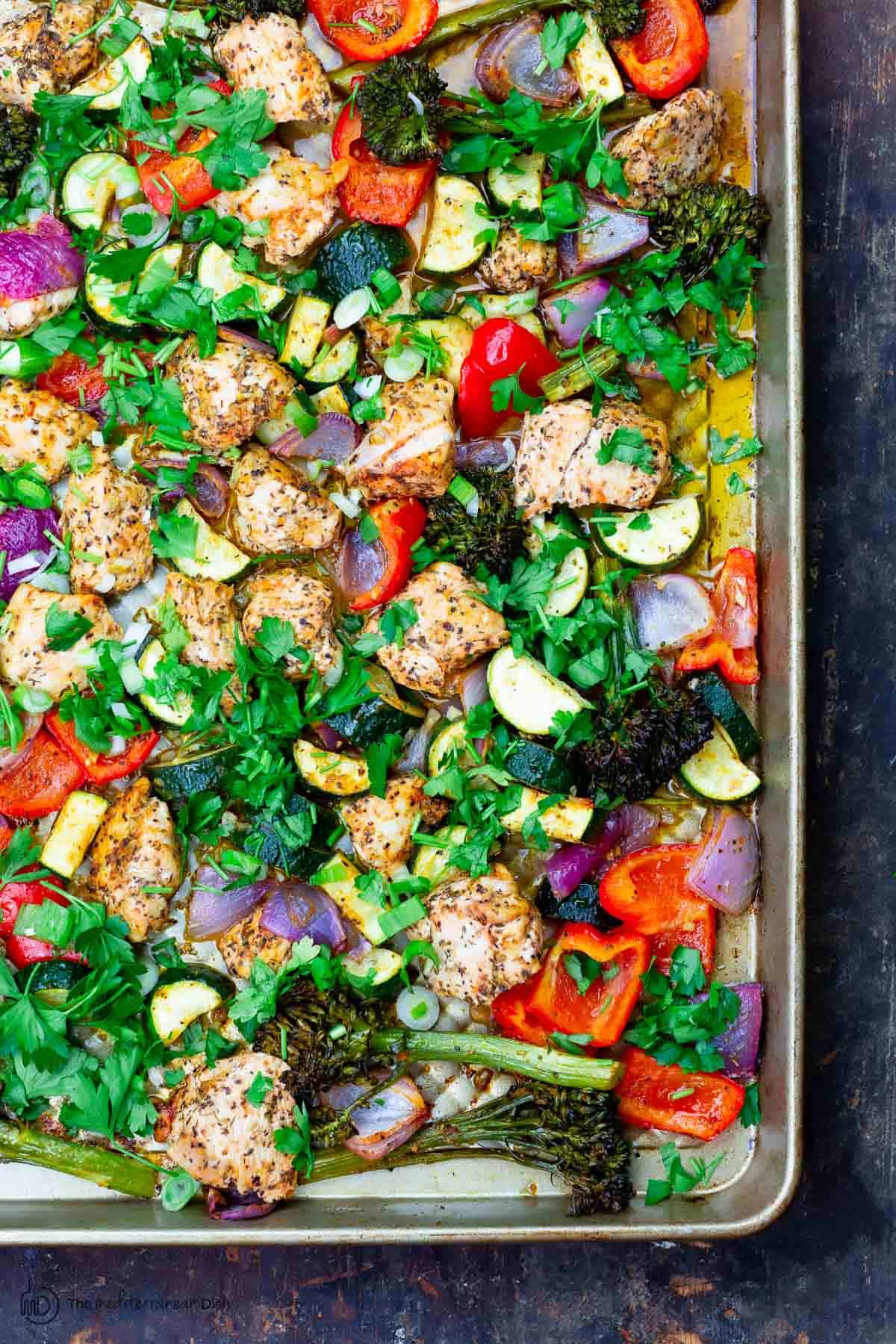
- One-pan meals
- Sheet-pan dinners
- Leftovers you actually want to eat
You’re not training for a competition.
You’re just trying to feel good and stay full.
Eat to Satisfaction—Then Stop
The biggest change isn’t what you eat.
It’s when you stop.
Eat slowly.
When you feel satisfied—not stuffed—stop.
You don’t need to clean the plate.
You don’t need to feel guilty.
You can save the rest.
That habit alone makes eating better sustainable.
Final Thought
You don’t need “diet food.”
You need real food that tastes good and fills you up.
When meals are satisfying, you stop obsessing over food.
And when you’re not obsessing, consistency becomes easy.
That’s how eating well actually works.
The Best Diet Plans Guide Team is a group of wellness writers and nutrition researchers dedicated to helping readers find simple, sustainable, and science-backed diet plans. We review products, compare meal programs, and share practical tips for healthy living at any age. Our mission is to make better health choices easier — one plan at a time.