If you’ve ever tried to “eat less” and ended up hungry, frustrated, or second-guessing every bite, you’re not alone.
Portion control is one of the hardest parts of weight loss — especially if you don’t want to count calories, weigh food, or track everything in an app.
The good news?
You don’t need a food scale.
With a few simple visual portion control tricks, your eyes can do most of the work for you.
Why Portion Control Is So Difficult
Portion sizes didn’t get bigger overnight — they slowly crept up.
• Plates got larger
• Restaurant servings doubled
• Packaged foods are designed to be eaten in one sitting
• Many of us were taught to “clean our plate”
Even when you’re eating healthy foods, it’s easy to eat more than your body needs.
If you’re just getting started, this is why focusing on small, practical changes works better than strict dieting — something we covered in The 7 Easiest Diet Changes for Fast Results.
Visual cues help your brain recognize “enough” before hunger and cravings take over.
1. Use Smaller Plates (This Works Better Than Willpower)
This is one of the easiest changes you can make.
When you use a large dinner plate, a normal portion looks small — and your brain feels deprived.
Try:
• 9-inch plates instead of oversized dinner plates
• Salad plates for meals
• Smaller bowls for cereal, pasta, or snacks
The same amount of food looks more satisfying on a smaller plate, and studies show people naturally eat less without noticing.
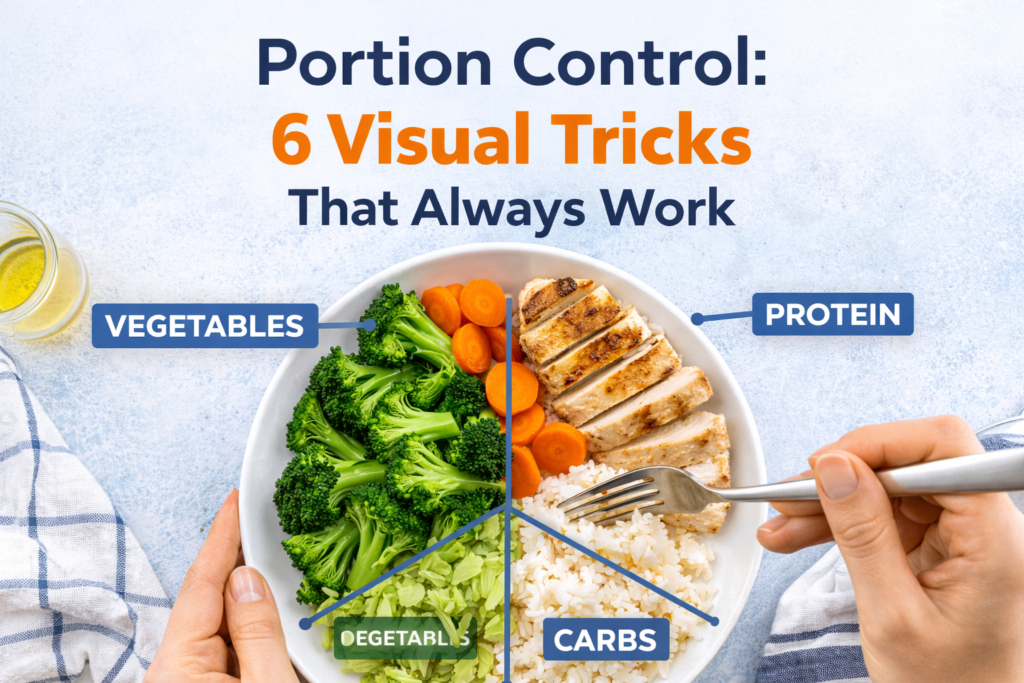
2. Fill Half Your Plate With Vegetables First
Before adding anything else to your plate, fill half of it with vegetables.
This automatically:
• Limits higher-calorie foods
• Adds volume and fiber
• Helps you feel full sooner
You don’t need fancy vegetables.
Simple options work:
• Broccoli
• Green beans
• Carrots
• Salads
• Roasted mixed veggies
Once half your plate is full, the rest of your meal naturally stays in balance — which makes portion control much easier over time.
3. Use Your Hand as a Built-In Portion Guide
Your hand is a simple, portable measuring tool.
Use this visual guide:
• Protein: palm-sized portion
• Carbs: fist-sized portion
• Fats: thumb-sized portion
• Vegetables: two fists
This works at home, restaurants, family dinners, or when someone else is cooking.
If calorie targets are important to you, this pairs well with a structured approach like How to Build a Simple 1,500-Calorie Meal Plan — without needing to track every bite.
4. Always Plate Your Food (Never Eat From the Package)
Eating directly from a bag or container makes portion control almost impossible.
Instead:
• Put snacks in a bowl
• Plate leftovers before sitting down
• Avoid standing and eating
Once food is on a plate, your brain sees a clear beginning and end to the meal — which reduces mindless overeating.
If you can see it, you can control it.
5. Keep Protein Equal to (or Bigger Than) Carbs
You don’t have to eliminate carbs — but portion balance matters.
A simple visual rule:
👉 Your protein portion should be equal to or larger than your carb portion.
Examples:
• More chicken than rice
• More fish than pasta
• More eggs than toast
Protein keeps you full longer and helps prevent cravings later in the day. This small adjustment often reduces the need for snacking — especially helpful if you’re choosing options like The Best Snacks Under 150 Calories.
6. Leave a Little Space on the Plate
This one feels odd at first, but it’s powerful.
Instead of filling the plate edge-to-edge, leave a little open space.
That small gap signals intention — not restriction.
You can always go back for more, but most people don’t need to once fullness catches up (usually 10–15 minutes after eating).
What About Restaurants?
Restaurants are designed to defeat portion control — but visuals still help.
Try this:
• Ask for a to-go box right away
• Mentally divide the plate in half
• Box up half before you start eating
You still enjoy the meal, and you often get leftovers for another day.
Portion Control Is a Skill — Not a Diet
The goal isn’t to eat tiny portions forever.
The goal is to retrain your eyes and habits so normal portions feel natural again.
You don’t need all six tricks at once.
Start with one or two.
Let consistency do the work.
Final Thoughts
You don’t need extreme discipline to lose weight.
You need simple systems that quietly guide better choices.
Visual portion control does exactly that — without stress, tracking, or guilt.
Up next, we’ll move into meal prep and cooking, where these portion habits really start to compound into long-term results.
Small changes.
Real progress.
No extremes required.
The Best Diet Plans Guide Team is a group of wellness writers and nutrition researchers dedicated to helping readers find simple, sustainable, and science-backed diet plans. We review products, compare meal programs, and share practical tips for healthy living at any age. Our mission is to make better health choices easier — one plan at a time.