A 1,500-calorie meal plan is one of the easiest, most realistic ways to lose weight without feeling deprived or overwhelmed. It works because it offers structure, portion control, and balance — but still gives you the flexibility to eat foods you actually enjoy.
Unlike strict fad diets that cut out whole food groups or force you into complicated rules, a 1,500-calorie plan is simple: it helps you eat fewer calories than you burn while still providing enough energy for daily activity. For many adults, it creates a manageable calorie deficit that supports steady, sustainable fat loss.
In this guide, you’ll learn exactly how to build a 1,500-calorie plan from scratch, how to portion your meals correctly, how to stay full, and how to create a plan that is easy to follow long-term. You’ll also get a full sample day you can start using today.
Why 1,500 Calories Works for Most People
Most adults need somewhere between 1,800 and 2,300 calories per day, depending on age, metabolism, and activity level. Eating 1,500 calories often creates a small but steady calorie deficit of 300–600 calories, resulting in 0.5 to 1 pound of weight loss per week.
That may sound slow, but slow and steady weight loss is more sustainable, safer, and more likely to stay off.
The real advantage of a 1,500-calorie plan is that it’s not extreme. You can still eat:
- Protein
- Carbs
- Healthy fats
- Snacks
- Real meals
…and still lose weight.
And if you’ve read posts like Easy Portion Control for Lasting Healthy Habits or 7 Must-Have Portion Control Tools for Weight Loss, you know structure beats strictness every time.
The Ideal Macro Split for a 1,500-Calorie Plan
You don’t need to obsess over macros, but following a general range helps you stay full and balanced:
- 35–40% protein (130–150 grams)
- 30–35% carbs
- 25–30% fats
A higher-protein approach works best because:
- It reduces cravings
- It supports lean muscle
- It keeps you full between meals
- It prevents overeating
- It stabilizes blood sugar
Protein is the real “weight-loss hack,” and a 1,500-calorie plan naturally leans into that.
Build Your Day With a 3–Meal + 1-Snack Structure
One of the easiest ways to manage calories is to divide your day:
- Breakfast: 350–400 calories
- Lunch: 400 calories
- Dinner: 450–500 calories
- Snack: 150–200 calories
You can shift calories around as needed. If you work out in the morning, move more calories to breakfast. If you get hungry at night, move 100 calories from breakfast to dinner.
The structure helps prevent two common problems:
1. Eating too little early in the day and overeating at night
2. Grazing all day without realizing how much you’ve eaten
Use the “3–2–1 Plate Method” for Every Meal
The simplest way to build any 1,500-calorie meal is to use this method:
3 — Protein (3–4 ounces)
This should take up the largest portion of your plate. Examples:
- Chicken breast
- Turkey
- Greek yogurt
- Eggs or egg whites
- Salmon
- Tuna packets
- Cottage cheese
- Beans or lentils
2 — Carbs or Veggies (2 cupped-hand portions)
Great options include:
- Oats
- Sweet potatoes
- Whole-grain bread or wraps
- Brown rice
- Fruit
- Mixed vegetables
- Salads with colorful veggies
1 — Healthy Fat (1 thumb-sized portion)
This keeps meals satisfying without blowing calories:
- Olive oil
- Peanut butter
- Avocado
- Nuts
- Seeds
It’s easy to accidentally add 200–300 calories with oils and sauces — so this simple rule helps keep the plan “tight.”
Foods That Fit Easily Into a 1,500-Calorie Lifestyle
A good meal plan uses foods that are easy to find, affordable, and enjoyable.
Protein Choices
- Chicken tenderloins
- Rotisserie chicken
- Tuna packets
- Turkey burgers
- Shrimp
- Lean ground turkey
- Low-fat cottage cheese
- Protein shakes
Carbs & Grains
- Oatmeal
- Rice cups
- Quinoa
- Whole-grain pasta
- Tortillas
- Potatoes
- Fruit cups
Healthy Fats
- Olive oil sprays
- Avocado
- Almonds
- Chia seeds
- Natural peanut butter
Vegetables
- Frozen broccoli
- Cauliflower rice
- Spinach
- Salad mixes
- Roasted veggies
- Zucchini and peppers
- Tomatoes
These foods help you stick to the plan because they’re both simple and versatile.
How to Build a Full Week Without Getting Bored
Many people think meal plans require eating the exact same food every day. But boring plans rarely last more than a week.
Instead, use meal rotations:
Breakfast Rotation Ideas
- Greek yogurt + fruit + granola
- Oatmeal with protein powder
- Two eggs + whole-grain toast + fruit
- Protein smoothie with spinach
Lunch Rotation Ideas
- Turkey wrap
- Chicken rice bowl
- Tuna salad + crackers
- Veggie omelet with toast
Dinner Rotation Ideas
- Chicken, rice, and veggies
- Stir-fry with lean beef
- Salmon + potatoes + greens
- Turkey chili
- Shrimp tacos
A rotation gives you variety while still keeping calories predictable.
Sample 1,500-Calorie Meal Plan (Full Day)
This exact day adds up to approximately 1,475–1,525 calories, depending on brands and cooking methods.
Breakfast — 375 Calories
Greek Yogurt Berry Crunch Bowl
- 1 cup non-fat Greek yogurt
- ½ cup berries
- ¼ cup granola
- 1 tbsp honey or maple syrup
Why it works:
Fast, filling, protein-rich, and great for gut health.
Lunch — 400 Calories
Lean Turkey Wrap
- 1 whole-grain tortilla
- 3 oz turkey
- 1 slice low-fat cheese
- Lettuce, tomato, onion
- 1 tbsp light mayo or Greek yogurt spread
- Baby carrots on the side
Easy, portable, and balanced.
Snack — 150–180 Calories
Choose one simple option:
- 1 apple + 1 tbsp peanut butter
- 18 almonds
- String cheese + ½ cup fruit
- 100-calorie popcorn
Snacks help control cravings and prevent overeating later.
Dinner — 500 Calories
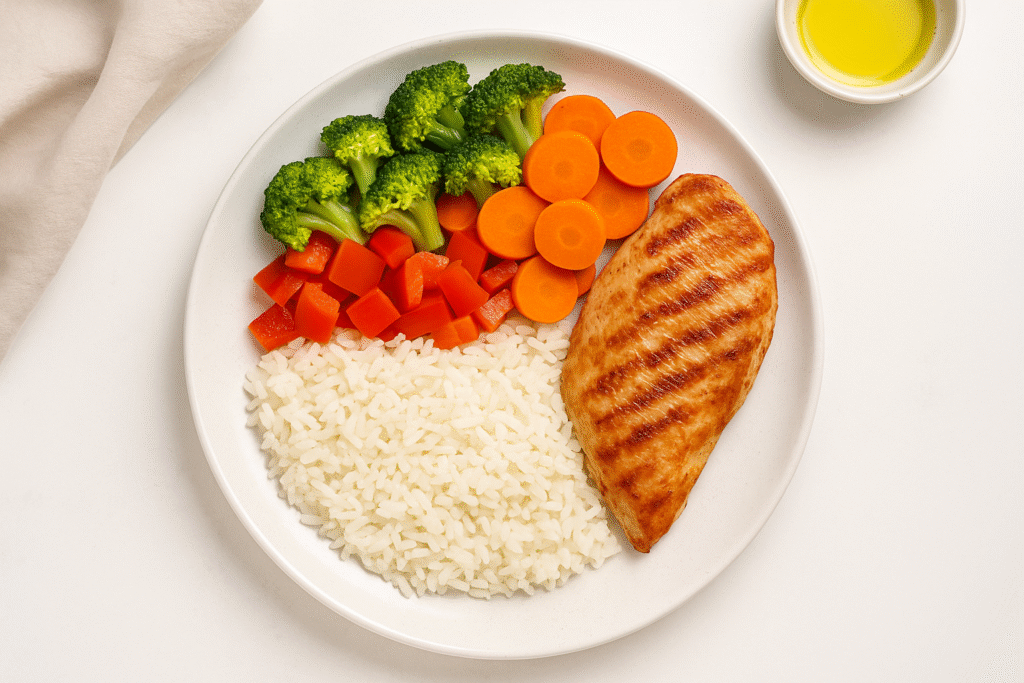
Simple Chicken Plate
- 4 oz grilled chicken
- ½ cup cooked rice
- 1–2 cups vegetables
- 1 tbsp olive oil or cooking spray
Why it works:
A classic portion-control meal that keeps you full for hours.
How to Adjust the Plan for Your Needs
If you’re still hungry:
Add ½ cup fruit or veggies to lunch or dinner (only 20–60 extra calories).
If you exercise regularly:
Add 100–150 calories post-workout, like:
- A banana
- A light protein shake
- A small granola bar
If mornings are busy:
Switch breakfast to something grab-and-go like a smoothie or protein bar.
If you tend to overeat at night:
Move 100 calories from breakfast to dinner.
The structure stays the same — you just shift calories based on your lifestyle.
Tips to Make a 1,500-Calorie Plan EASY
Most people fail not because calorie plans are too hard, but because life gets busy. These tips help you stay consistent:
1. Keep “quick proteins” ready
Examples:
Rotisserie chicken, tuna packets, yogurt, boiled eggs.
2. Use frozen veggies
No chopping, no spoiling, no excuses.
3. Pre-portion snacks
Put almonds, popcorn, or fruit in baggies for easy grab-and-go.
4. Meal prep small, not big
Prep 2–3 meals, not 7.
Large meal prep burns people out.
5. Make smart swaps
Swap sauces, dressings, and oils with lower-calorie versions.
We cover similar strategies in Healthy Holiday Swaps, which also applies year-round.
Common Myths About a 1,500-Calorie Plan
Myth #1: You’ll feel hungry all the time
Not true — not when you eat enough protein, fiber, and volume veggies.
Myth #2: You can’t eat carbs
Carbs are important for energy and digestion. The key is portion size.
Myth #3: It’s too restrictive
Actually, it’s one of the most flexible calorie plans because it balances all food groups.
Myth #4: You need expensive “diet foods”
You can do this plan with everyday grocery store items.
Reference Link
MedlinePlus — Healthy Weight Management
The Best Diet Plans Guide Team is a group of wellness writers and nutrition researchers dedicated to helping readers find simple, sustainable, and science-backed diet plans. We review products, compare meal programs, and share practical tips for healthy living at any age. Our mission is to make better health choices easier — one plan at a time.